
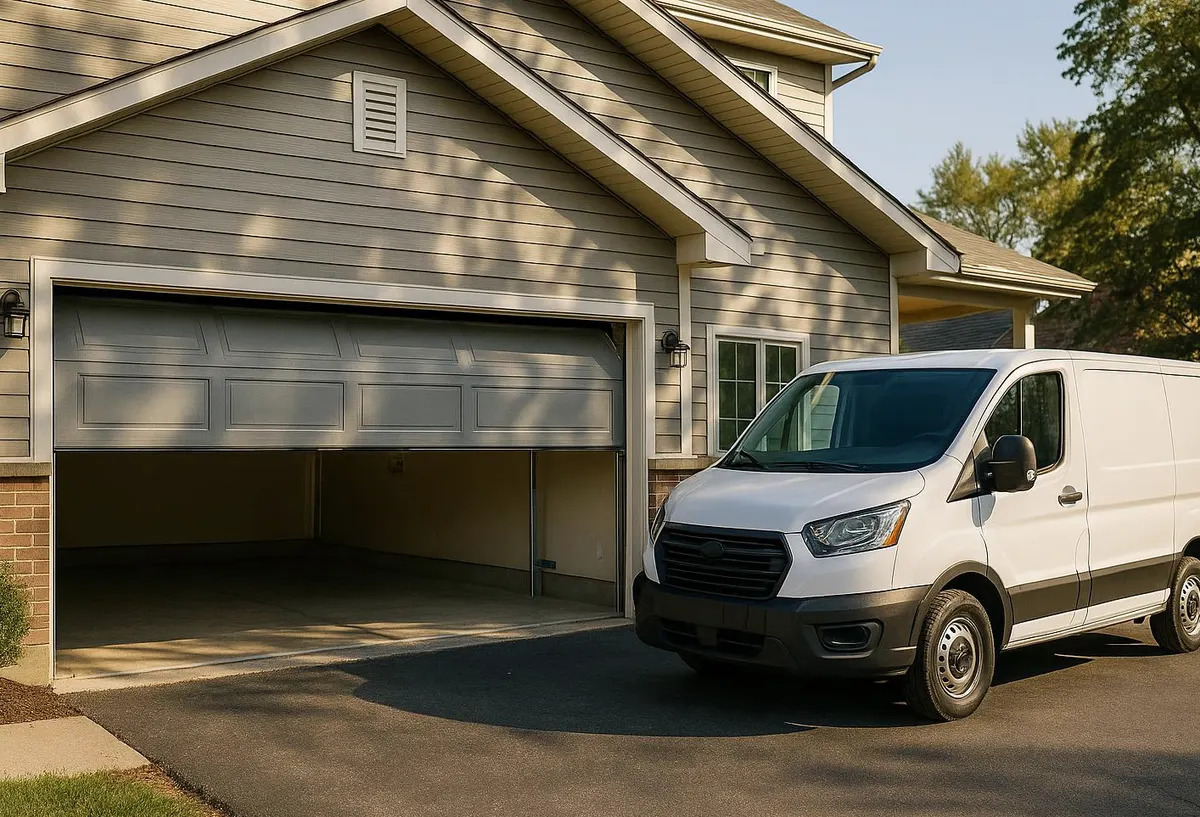
You hit the opener button on a cold morning, coffee in hand, and nothing happens — or worse, the door jerks up an inch, groans, and stops. Maybe you hear a crack as the bottom seal tears free from a sheet of ice on the slab. This is a familiar scene in Northern Virginia garages once the temperature drops and stays there overnight. The good news: most of these problems follow a predictable pattern, and knowing what to look for can save you a service call or help you describe the issue accurately when you make one.
The Signs You're Dealing With a Cold-Weather Garage Door Problem
Before getting into causes, it helps to know exactly what you're experiencing, since different symptoms point different directions.
- The door is physically stuck to the floor — you can hear the opener motor straining, but the door doesn't lift until you break a seal of ice along the bottom.
- The door moves, but slowly and unevenly, almost like it's dragging through sand, with visible jerks at certain points on the track.
- The opener reverses immediately after you give the command, or stops partway and goes back down on its own.
- Loud bangs or pops come from the spring area when the door finally does move.
- The remote works some mornings and not others, or only works when you're standing right next to the opener unit.
Each of these points toward a specific mechanical cause, and a technician checks them in a fairly consistent order because some are far more common — and far cheaper to fix — than others.
What's Actually Going Wrong, Checked in Order
1. Ice Sealing the Door to the Slab
This is the first thing worth ruling out, and often the simplest. After heavy rain or a coastal storm moves through and temperatures drop overnight, water that pooled at the base of the door freezes solid, gluing the rubber weatherstrip to the concrete. The fix here isn't force — pulling hard on the opener or manually yanking the door can strip gears, bend the bottom panel, or tear the seal. Instead, the seal needs to be gently freed with warm water or a plastic scraper, and going forward, the garage floor should be checked for drainage issues, cracks, or a sloped approach that lets water collect right at the threshold. On older homes with original concrete aprons, re-grading or a new seal is sometimes the long-term answer.
2. Hardened Lubricant and Dirty Rollers
If there's no obvious ice, the next check is the rollers, hinges, and track. Grease and lubricant that worked fine in the humid summer months can thicken and stiffen in cold air, especially if it's old or has picked up dirt and grit over the warmer season. This shows up as that slow, uneven, dragging motion rather than a hard stop. The fix is a full cleaning of the track and rollers followed by a fresh application of a lubricant rated for low temperatures — not household oil or WD-40, which can attract more dust and break down quickly in freezing conditions.
3. Spring Tension Changes in the Cold
Torsion and extension springs lose a bit of flex in cold metal, and a spring that was already near the end of its life may suddenly not have enough lift to raise the door smoothly, especially a heavier insulated or wood-style door common on older Alexandria-area homes. This is what causes that banging or popping sound, or an opener that strains and reverses because the door feels heavier than the opener's force setting expects. Checking spring tension is not a homeowner task — the springs are under extreme tension and release that energy violently if handled wrong. A technician checks the gap in the torsion spring coils and tests balance by disconnecting the opener and lifting the door by hand; if it doesn't hold position roughly halfway up, the springs need adjustment or replacement.
4. Opener Force and Limit Settings
Next comes the opener itself. Cold-stiffened rollers and thicker lubricant mean the door takes more effort to move than it did in September, and opener force settings calibrated for warmer conditions can start misreading that extra resistance as an obstruction, triggering an automatic reversal. The fix involves recalibrating the up and down force and travel limits on the opener unit, something that takes a few minutes with the right model and manual but is easy to get wrong without one.
5. Track Alignment and Housing Shifts
Older homes settle over time, and the freeze-thaw cycle common to this region — icy nights, warmer rainy days, repeat — can shift a garage's framing just enough to throw tracks slightly out of alignment. In cold weather this shows up as binding at specific spots rather than a smooth motion problem throughout. A technician checks plumb and level on both tracks and re-secures or adjusts brackets as needed.
6. Weak Batteries and Sensitive Electronics
Finally, if the remote is inconsistent or the opener seems to respond late, cold temperatures reduce battery output in both the remote and any battery backup system built into the opener. This is a quick, low-cost fix — fresh batteries — but worth checking before assuming there's a bigger electrical problem.
When to Call Alexandria Garage Door Pro
A door that's merely sticky from ice or needs fresh lubricant is often something you can manage yourself. But if you're hearing banging from the spring area, the opener keeps reversing after a recalibration attempt, or the door won't hold position when lifted by hand, it's time to call. Our Spring Replacement service handles the dangerous, high-tension work safely, and our Preventive Maintenance visits catch stiffening rollers, drifting track alignment, and aging weatherstripping before a hard freeze turns them into a stuck door at 6 a.m.
If your garage door is frozen, grinding, or refusing to cooperate this winter, call Alexandria Garage Door Pro — we serve Alexandria, VA and the surrounding areas, and we're ready to get your door moving smoothly again before the next cold snap hits.